Your Job Is Already Context Management
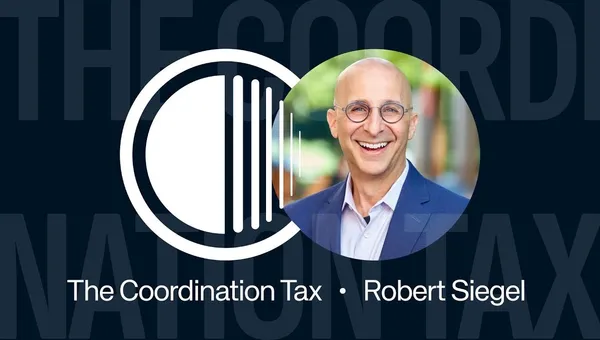
Robert Siegel argues a leader's scarcest asset is no longer facts. If that is right, then most of what looks like management overhead is the job itself, being done by hand.

Robert E. Siegel teaches Systems Leadership at Stanford’s Graduate School of Business. He worked on Andy Grove’s research team for Only the Paranoid Survive, which is a reasonable claim to having watched a company navigate a genuine inflection from the inside. When he came on The Coordination Tax, he reduced the modern leader’s problem to an equation.
Truth equals facts plus context.
Facts, he pointed out, have been commoditised. Any model will hand you as many as you can ask for, in whatever format you like, in seconds. What has not been commoditised is the thing that makes a fact mean something — who else knows it, what decision it bears on, what was already tried, what changed last week, what the number looked like before.
That half of the equation still lives almost entirely inside people’s heads. And supplying it is not an adjunct to a manager’s job. Increasingly, it is the job.
The week is already spent on it
We put the question to 247 managers across five countries in June 2026 and asked them to itemise where the hours actually go. The Coordination Tax Index came back at 16.5 hours a week — 41% of a 40-hour week — broken down into three activities:
- 8.1 hours of status meetings
- 4.6 hours re-explaining context to people who already had it
- 3.8 hours hunting for decisions that already exist somewhere
The usual reading of those numbers is waste. Too many meetings, poor documentation, a discipline problem to be fixed with better habits.
Read them against Siegel’s equation instead and something less comfortable appears. A status meeting is context being transmitted verbally because there is nowhere else to put it. Re-explaining is context being served at a second resolution to a second audience. Searching is context being retrieved from an archive that was never designed as one.
All three are the same activity. None of them is optional. What is wrong is not that managers do them — it is that they do them by hand, in real time, from memory, one recipient at a time, at the highest hourly rate in the building.
The 16.5 hours are not the tax on the job. They are the job, running without infrastructure.
Three moves, and none of them is “share everything”
Once you see management as context work, the shape of the work becomes specific. It is not one activity. It is three, and they run in different directions.
Downward, the move is expansion. A team cannot act on a decision without the reasoning underneath it — what was considered, what was ruled out, what constraint made the call go this way. Hand down the conclusion alone and you get either paralysis or a team that executes the letter of a decision through a situation the decision never anticipated. Detail is what converts an instruction into a mandate.
Upward, the move is compression. A level above yours does not need forty items. It needs the two that changed, the one that is at risk, and the trade-off you are asking them to arbitrate. Send everything and you have not informed anyone; you have relocated your own triage problem onto someone with less time than you.
Sideways, the move is currency. Peers do not usually need more of your detail. They need the version they are holding to be the current one. Most cross-team failures we see are not disagreements. They are two teams operating correctly on different vintages of the same fact.
Notice that all three are resolution problems. The same underlying reality, served at different levels of detail to different audiences, and kept current across all of them. That is why “just document more” has never worked, and why every wiki eventually becomes a graveyard. A document is a single resolution. The job requires several, from one source, continuously.
And there is a fourth constraint that most tooling ignores entirely: some of the context should not travel at all. A manager holds MNPI, an unannounced reorganisation, a performance conversation, an acquisition under diligence. Context management is not a transparency project. Deciding what does not move is as much of the work as deciding what does.
AI did not reduce this. It added a recipient.
The finding in the Index that should give any AI rollout pause is this one: managers who use AI daily report 20.3 hours a week of coordination overhead. Non-users report 9.1.
More than double, in the wrong direction.
That is a correlation, not a mechanism, and the honest caveat is that heavy AI users tend to sit in denser, more fragmented roles to begin with. But the same dataset offers a mechanism worth taking seriously: 91% of managers load context manually before their assistant is useful. Paste, explain, correct, re-paste. Every session, from scratch.
An assistant that has to be briefed from zero is not a reduction in context work. It is one more party who needs the context, added to a list that was already too long — and unlike a colleague, it forgets between Tuesday and Wednesday.
Siegel’s own analogy on the episode was phone notifications: the volume goes up, the signal does not, and the triage lands on a person. Scale that to an organisation where every function now generates output faster than anyone can reconcile it, and the arithmetic is straightforward. Anything that produces more, faster, produces more that has to be squared with everyone else.
Facts got cheaper. The context bill went up.
What would have to exist
If context management is the job, then the missing piece is infrastructure for it — and the specification is fairly demanding.
It has to hold one record of what was decided and why, so that up, down and sideways are drawing from the same source rather than three reconstructions of it. It has to serve that record at different resolutions without a human rewriting it each time: the compressed version upward, the reasoned version downward, the current version across. It has to stay current on its own, because a record that goes stale re-creates the searching hours it was meant to remove. And it has to be permissioned at the level of the person, not the document — because a system that makes context flow freely in every direction is not solving the problem, it is a leak.
That last requirement is the one that decides whether any of this is usable in a real company. If an AI sitting on top of the organisation’s context can see more than the person asking it, the whole structure becomes unusable for exactly the work that matters most — board material, people decisions, anything under diligence.
That specification is what In Parallel builds: a shared record of goals, decisions and commitments that both people and AI read from, where an AI only ever sees what its user can see, workspaces do not bleed into one another, the data is EU-hosted by default, and none of it trains a model. Whether we have got the shape of it right is a fair question, and the answer will come from customers rather than from us.
What this does not solve
Infrastructure does not make judgment. Deciding which two of the forty items your CEO needs is a leadership skill, and no system supplies it. Neither does it fix a culture where context is hoarded deliberately — shared context amplifies whatever culture it lands in, and in a political organisation it will faithfully amplify the politics. It will not make an unclear strategy clear; it will only make the lack of clarity visible sooner, which is useful but not the same thing. And it does nothing about the meetings that exist for reasons other than information.
What it does claim is narrower. Of the 16.5 hours, the managers we surveyed estimated that context-aware AI would return 4.4 — about 27% of the measured tax. Priced the way the rest of the Index is priced, at 46 working weeks and a fully loaded $85 an hour, that is roughly $17,000 per manager per year. The 4.4 is what managers told us; the $17,000 is arithmetic on top of it. That is a floor worth arguing about, not a transformation.
The Monday move
Siegel closed the episode with a challenge rather than a framework: open your calendar and look at where the hours actually went last week. Your team is reading that, whatever the strategy deck says.
We would add one column to the exercise. For each block, ask what it was for. Not the meeting title — the function. Were you transmitting context, retrieving it, or compressing it for someone above you?
If most of the week comes back marked that way, you have not found a time-management problem.
You have found your actual job, and the fact that you are doing it without any tools.
That is the part we can help with. If you need a context management platform — one shared record, served at the right level of detail up, down and sideways, permissioned so that nothing travels further than it should — that is what In Parallel is for, and what we are here for. See pricing or book a walkthrough.
The Hidden Cost of Leading: Robert Siegel on AI, cross-pressures, and outdated leadership playbooks is available now. The Coordination Tax Index 2026 was fielded in June 2026 across 247 managers in the United States, the United Kingdom, Canada, Australia and Germany, spanning nine industries.
Get insights like this in your inbox
One email per week on execution intelligence, team coordination, and enterprise AI. No fluff.
By subscribing you agree to our Privacy Policy. Unsubscribe anytime.